Outreach
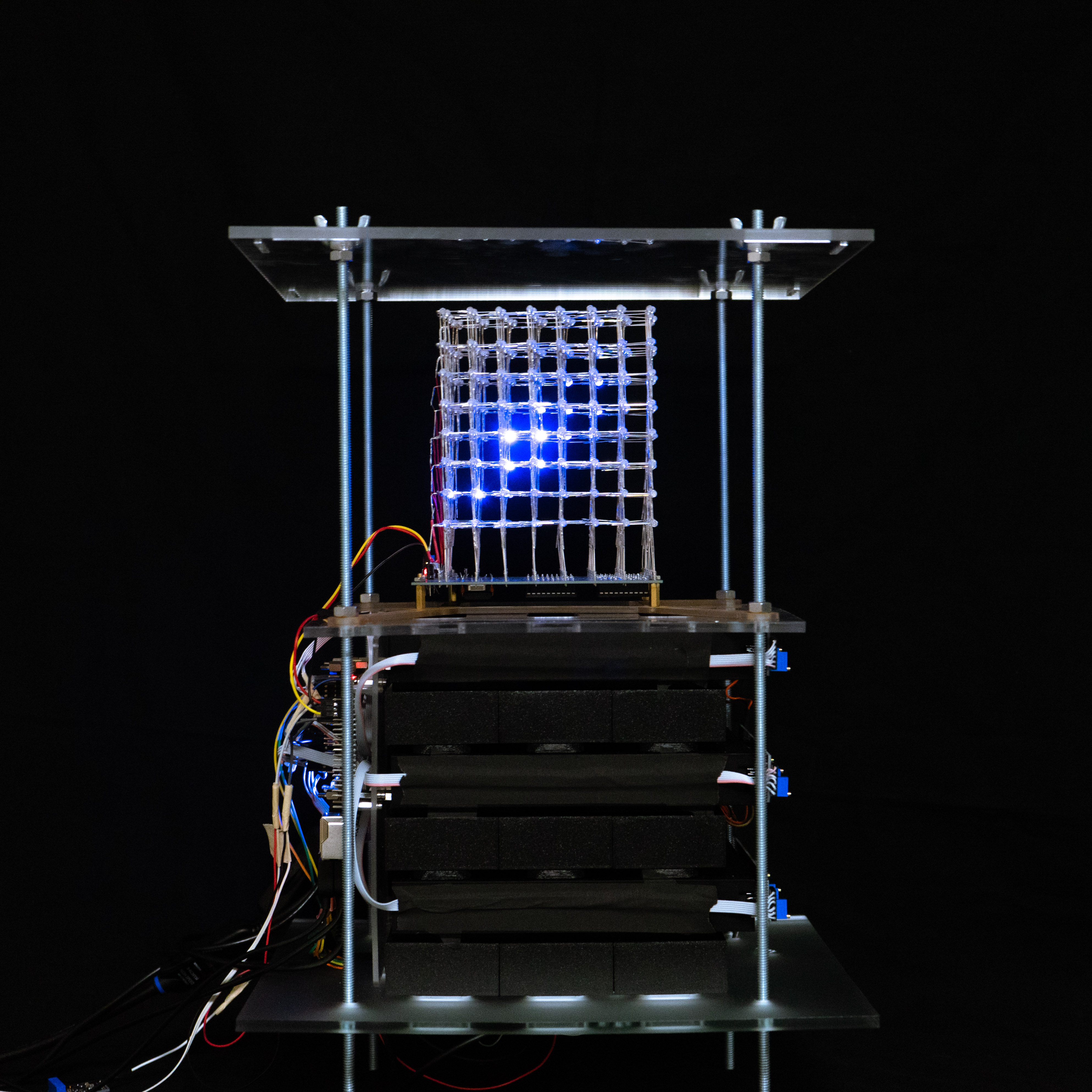
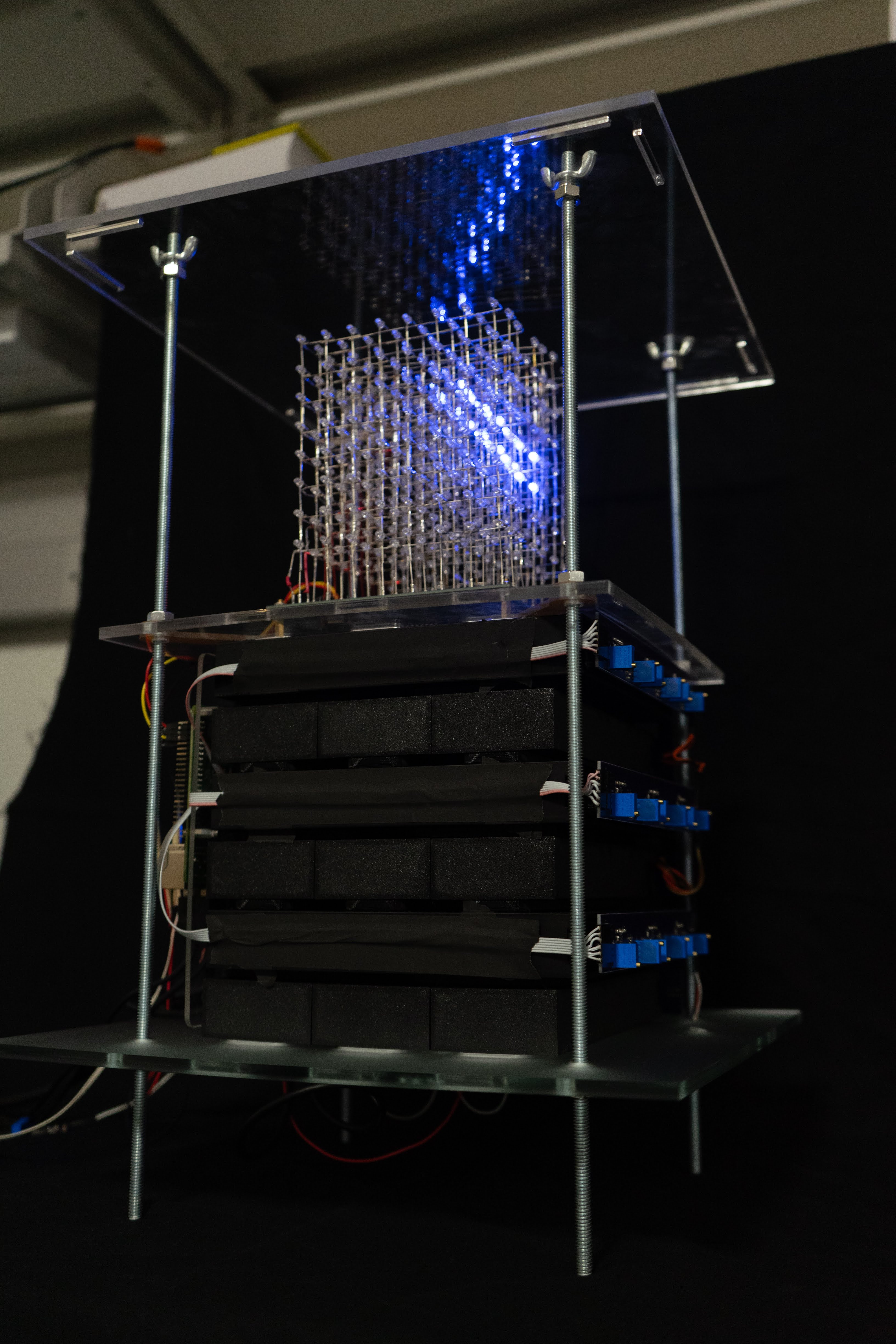
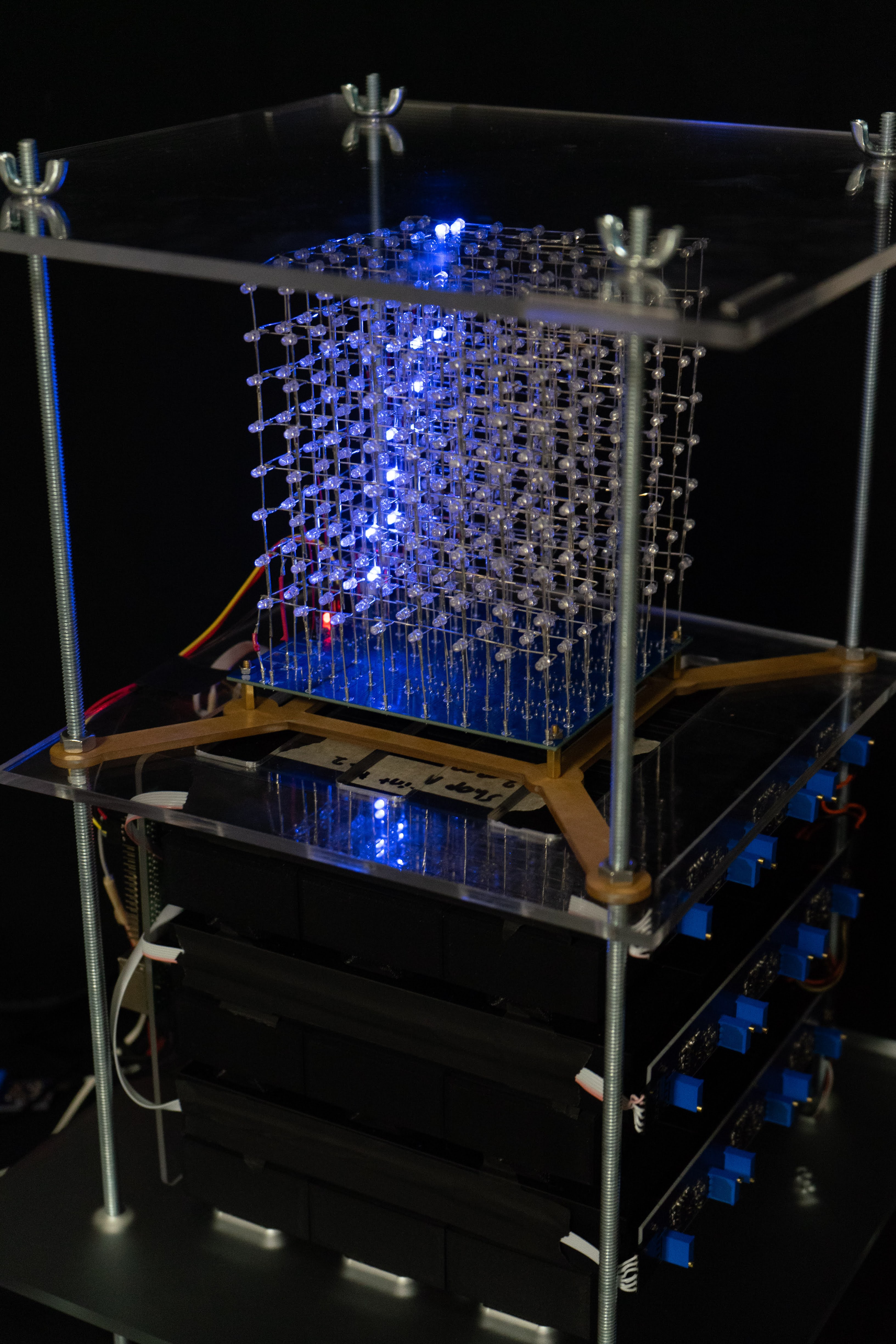
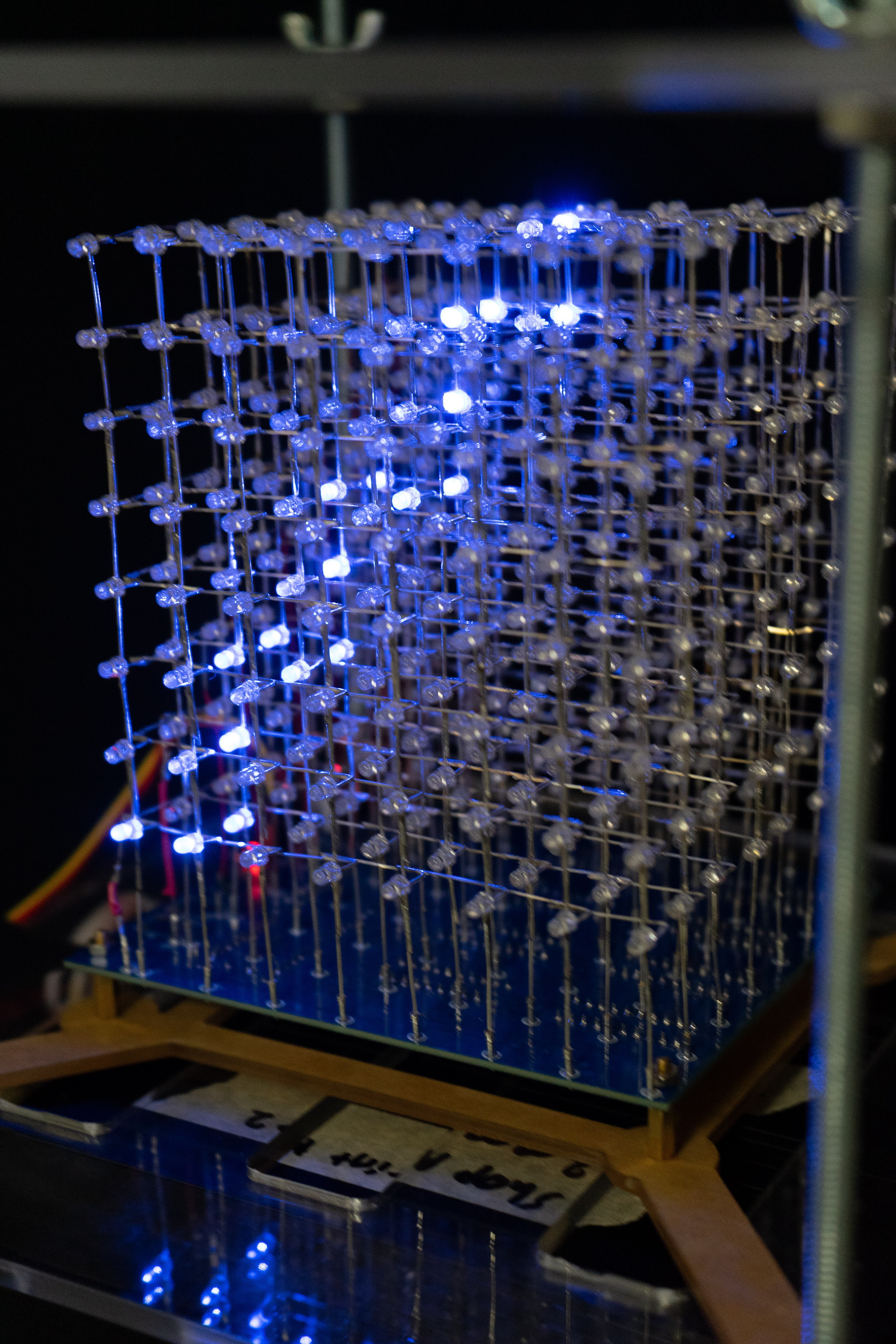
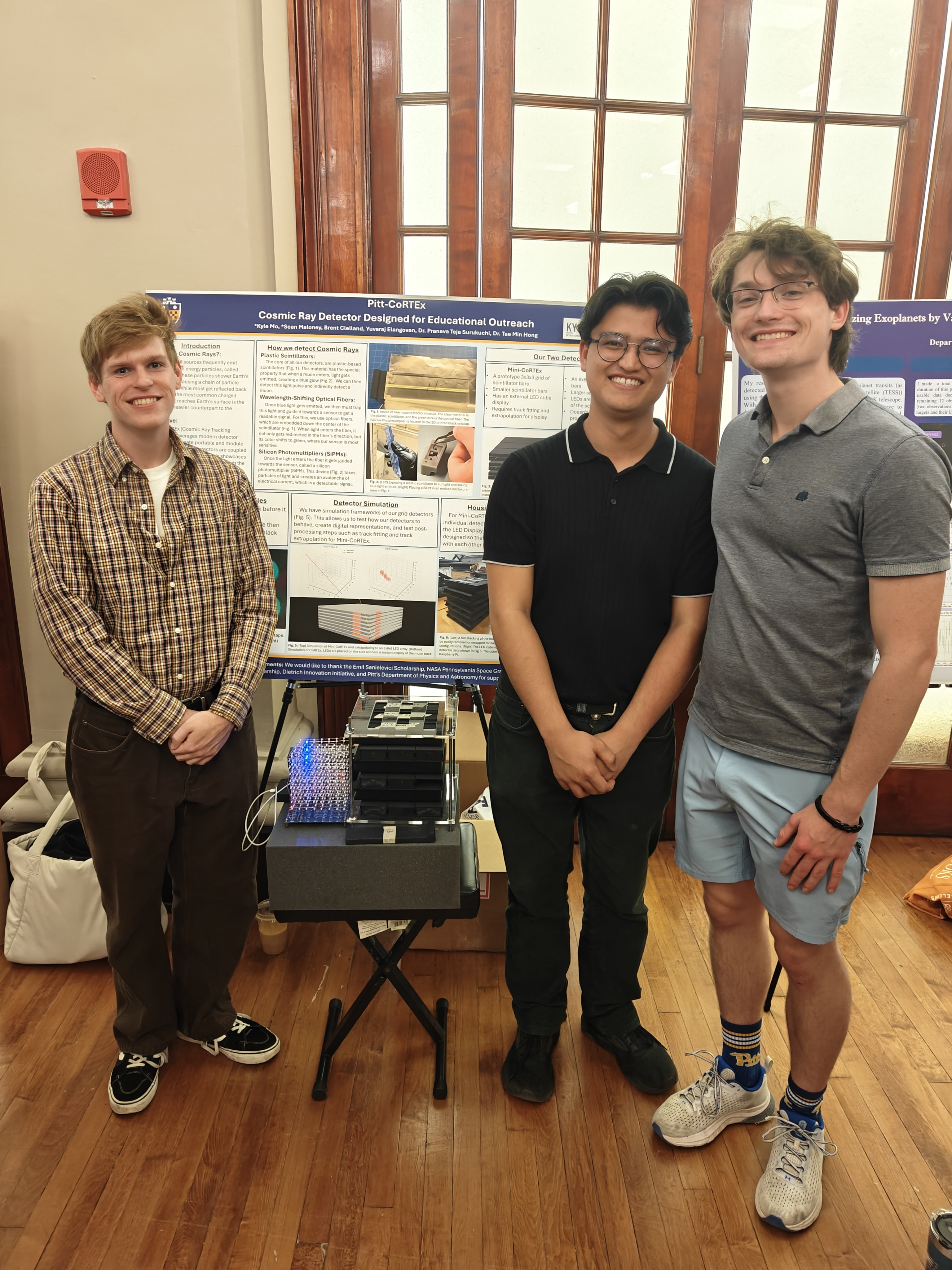
mini-CoRTEx displaying a reconstructed muon.
What Are Muons?
Cosmic rays come from many astrophysical sources, including the Sun, stars in our galaxy, and sources beyond the Milky Way. When these high-energy particles interact in Earth's atmosphere, they produce secondary particles, including muons.
Muons were discovered in 1936 by Carl Anderson and Seth Neddermeyer. Since then, they have played an important role in both fundamental physics and practical applications, from astroparticle studies to large-scale muon imaging.
Why muons are useful for undergraduate outreach and labs:
- They are naturally available, so no particle beam is required.
- They can be studied safely with educational detector systems.
- They connect ideas from astrophysics to hands-on measurement in the lab.
- They offer real examples of how scientists detect and analyze invisible particles.
Cosmic Ray Tracking Experiment (CoRTEx)
Pittsburgh Cosmic Ray Tracker Experiment (Pitt-CoRTEx) is a modular detector platform designed for both outreach and undergraduate training. It combines visually engaging event displays with research-style data collection and analysis.
The detector concept is based on modular scintillator bars, optical readout, and silicon photomultiplier-based electronics. This design supports robust operation, easy replacement of modules, and flexible educational use.
Through CoRTEx, students gain experience across the full detector workflow:
- Design and develop detector subsystems.
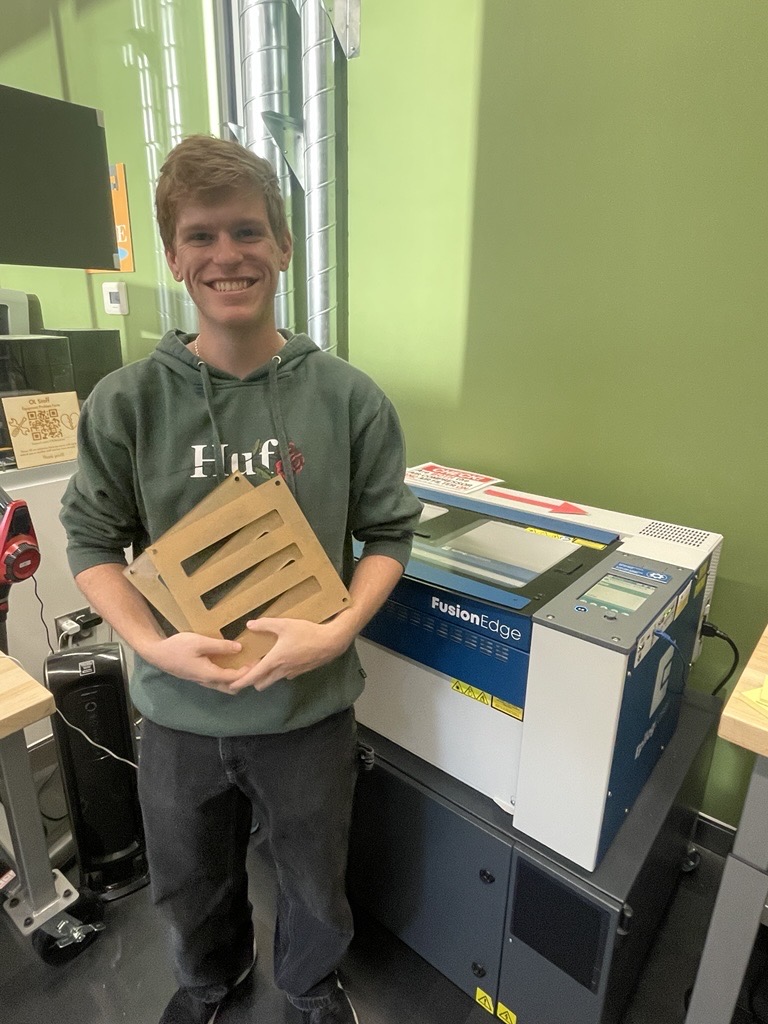
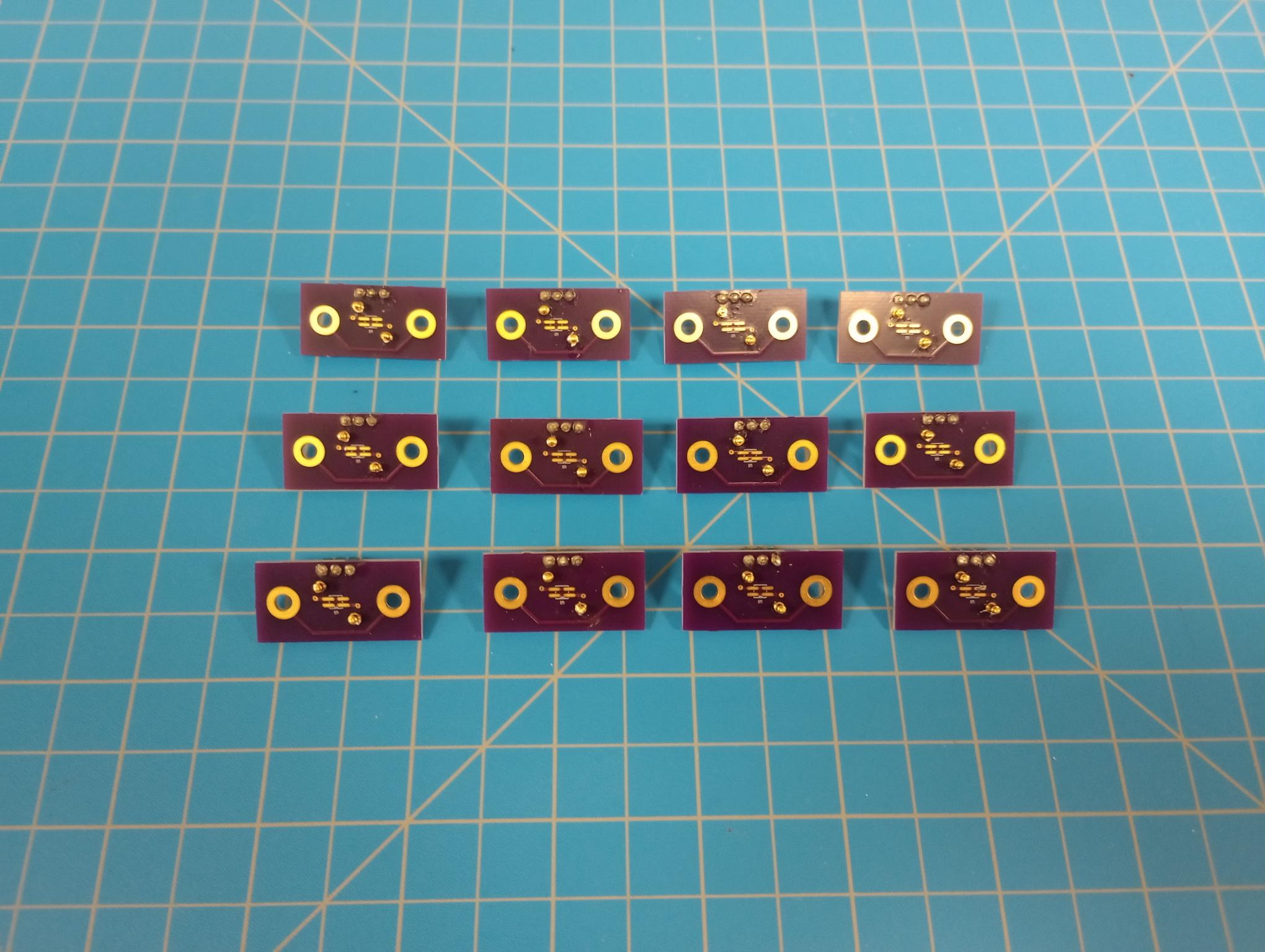
- Fabricate and assemble detector components.
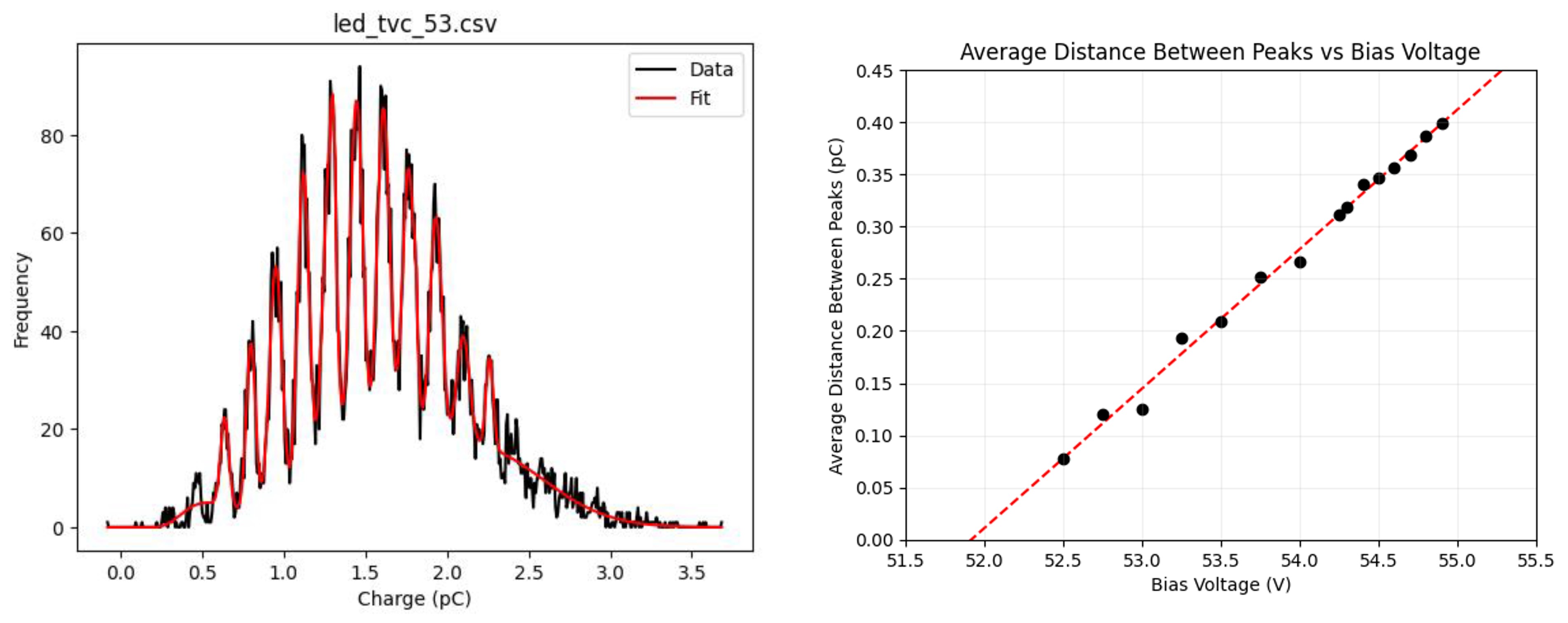
- Characterize detector response and performance.
- Analyze and interpret collected data.
- Apply machine learning methods to detector and event data.
Simulation of muons passing through CoRTEx, including scintillator bar hits.
mini-CoRTEx
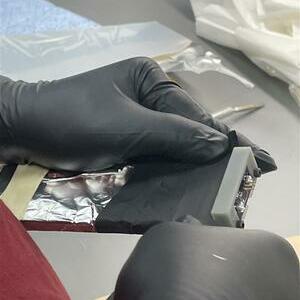
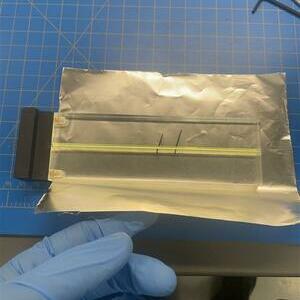
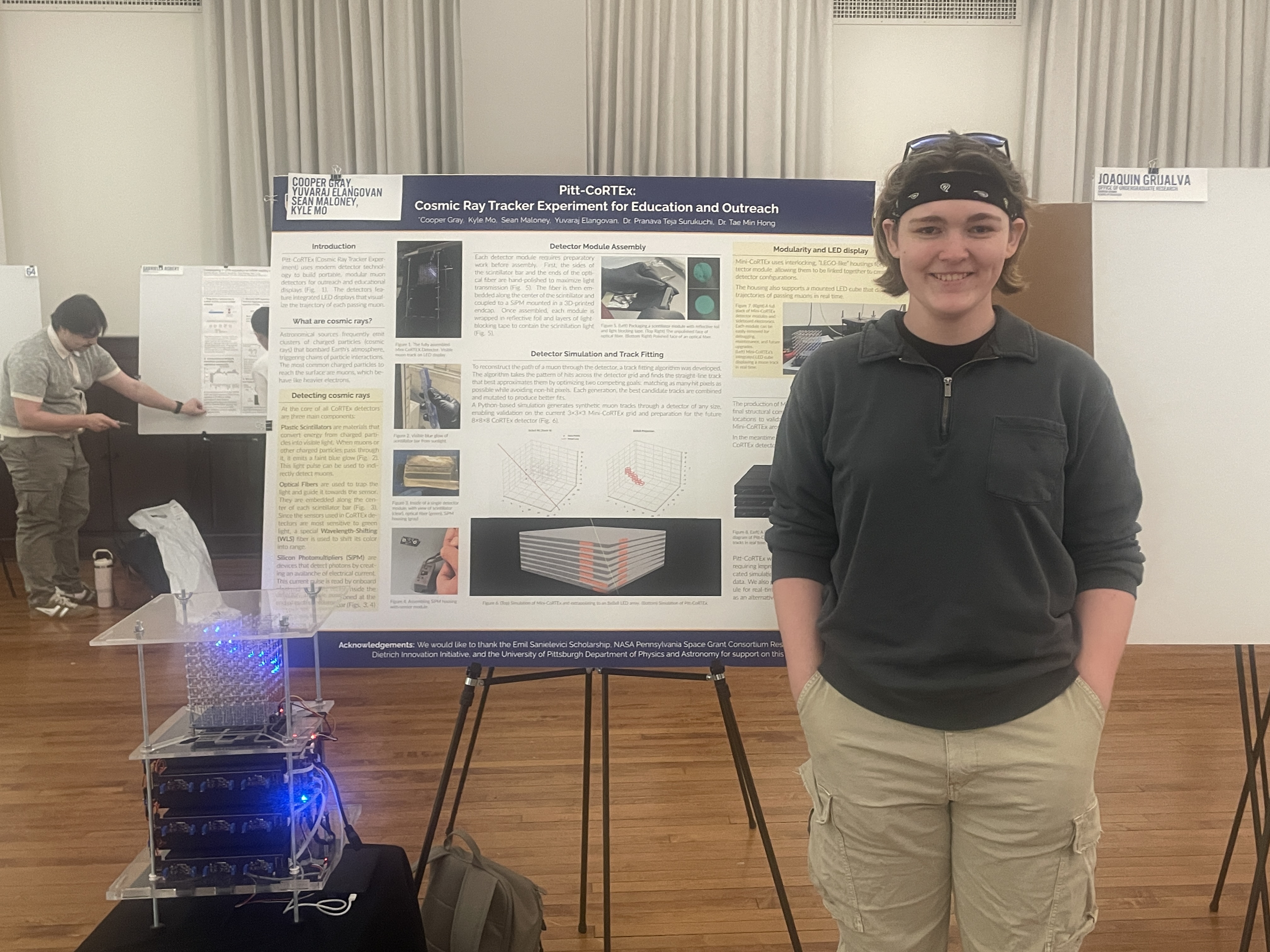
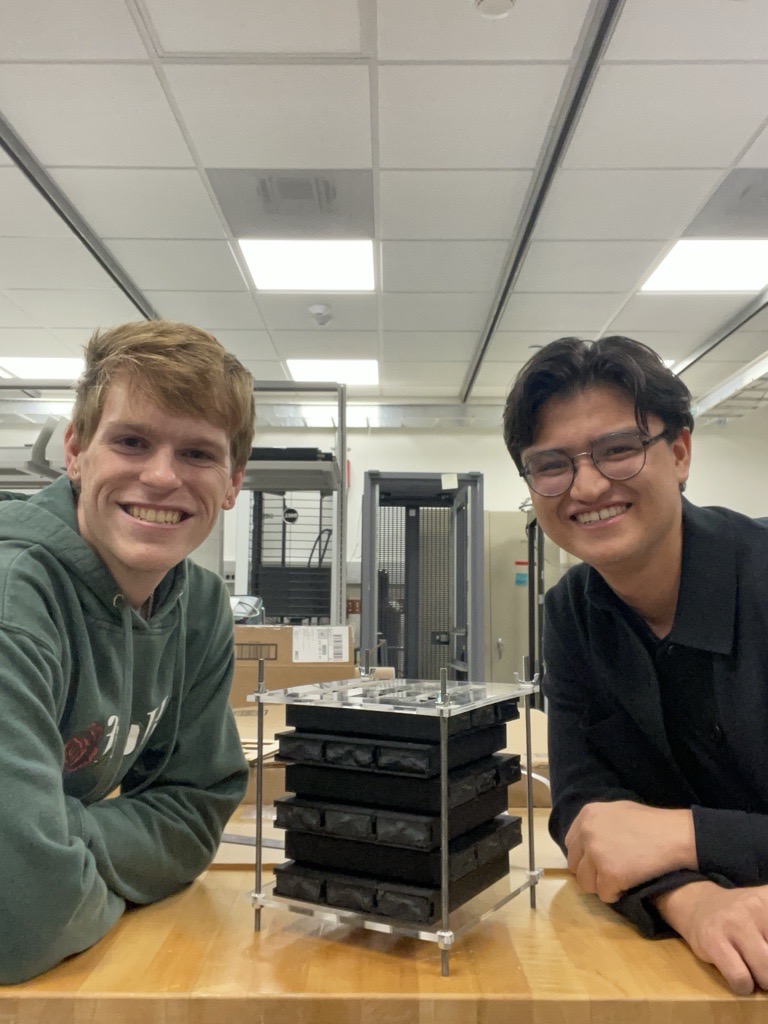
mini-CoRTEx is the proof-of-principle and training-scale version of Pitt-CoRTEx. It is used for hands-on learning, outreach demonstrations, and detector characterization.
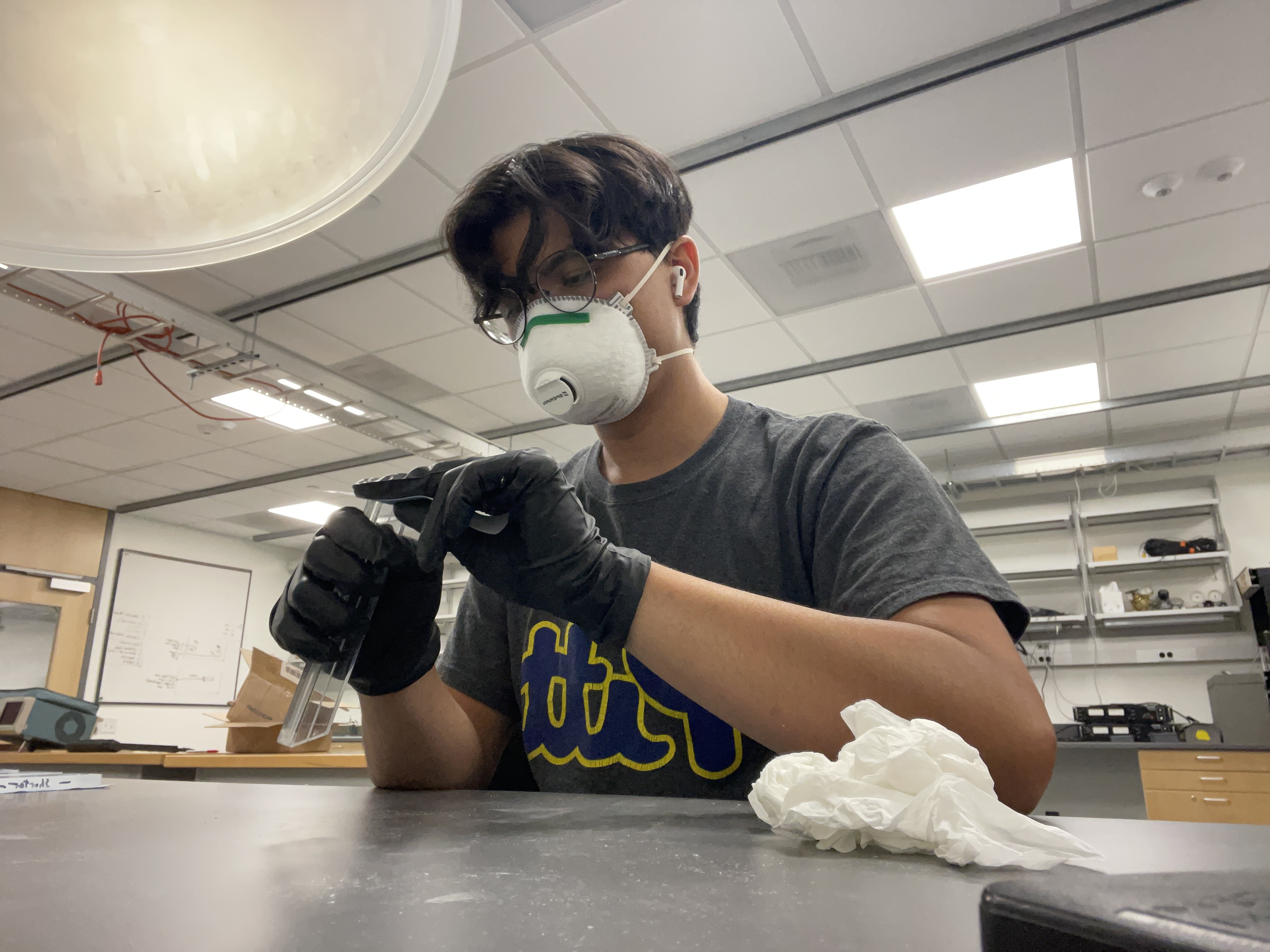
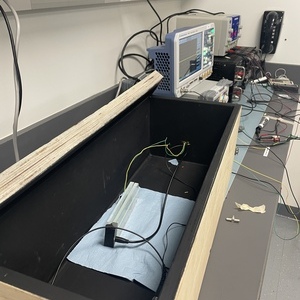
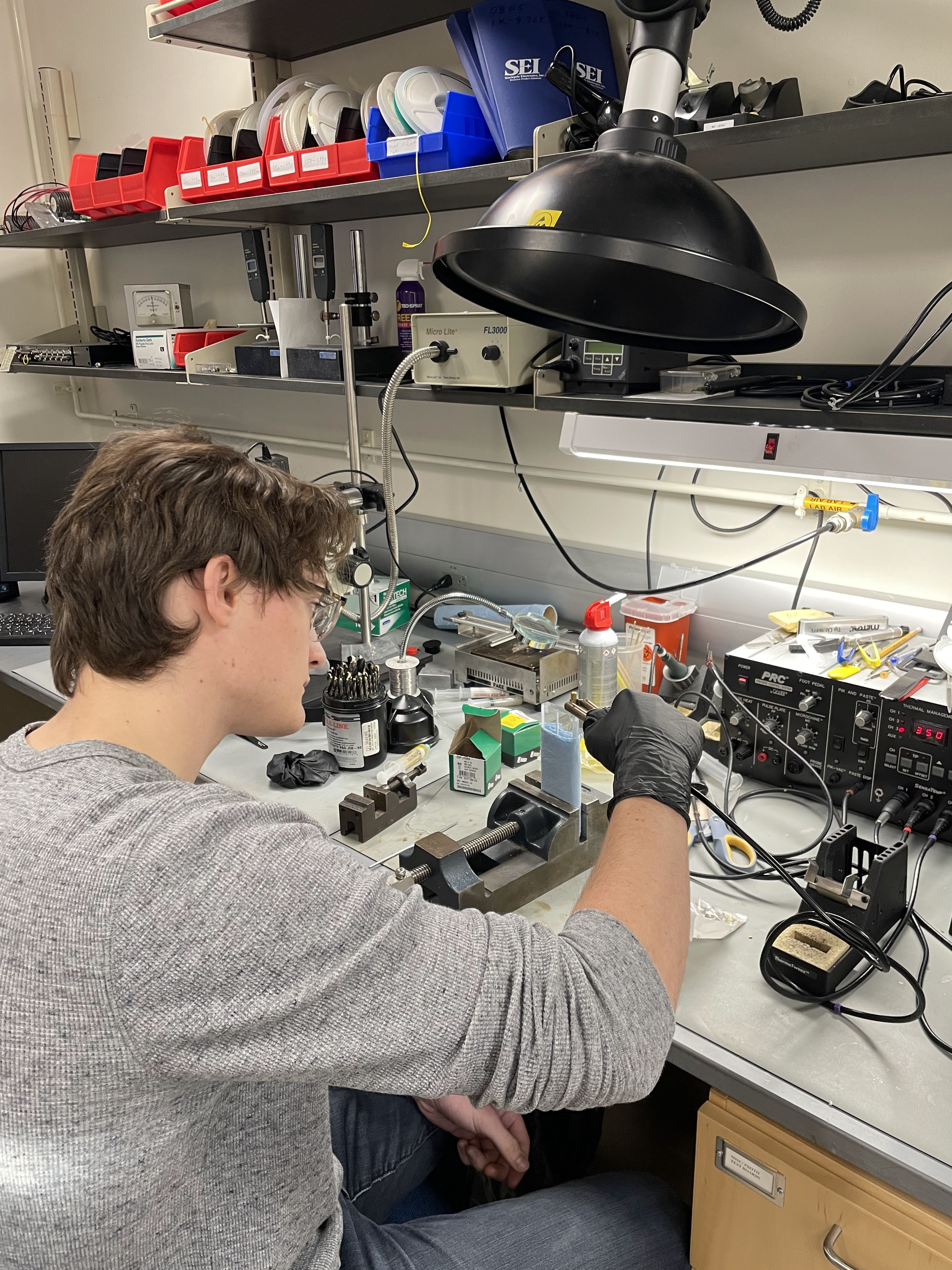
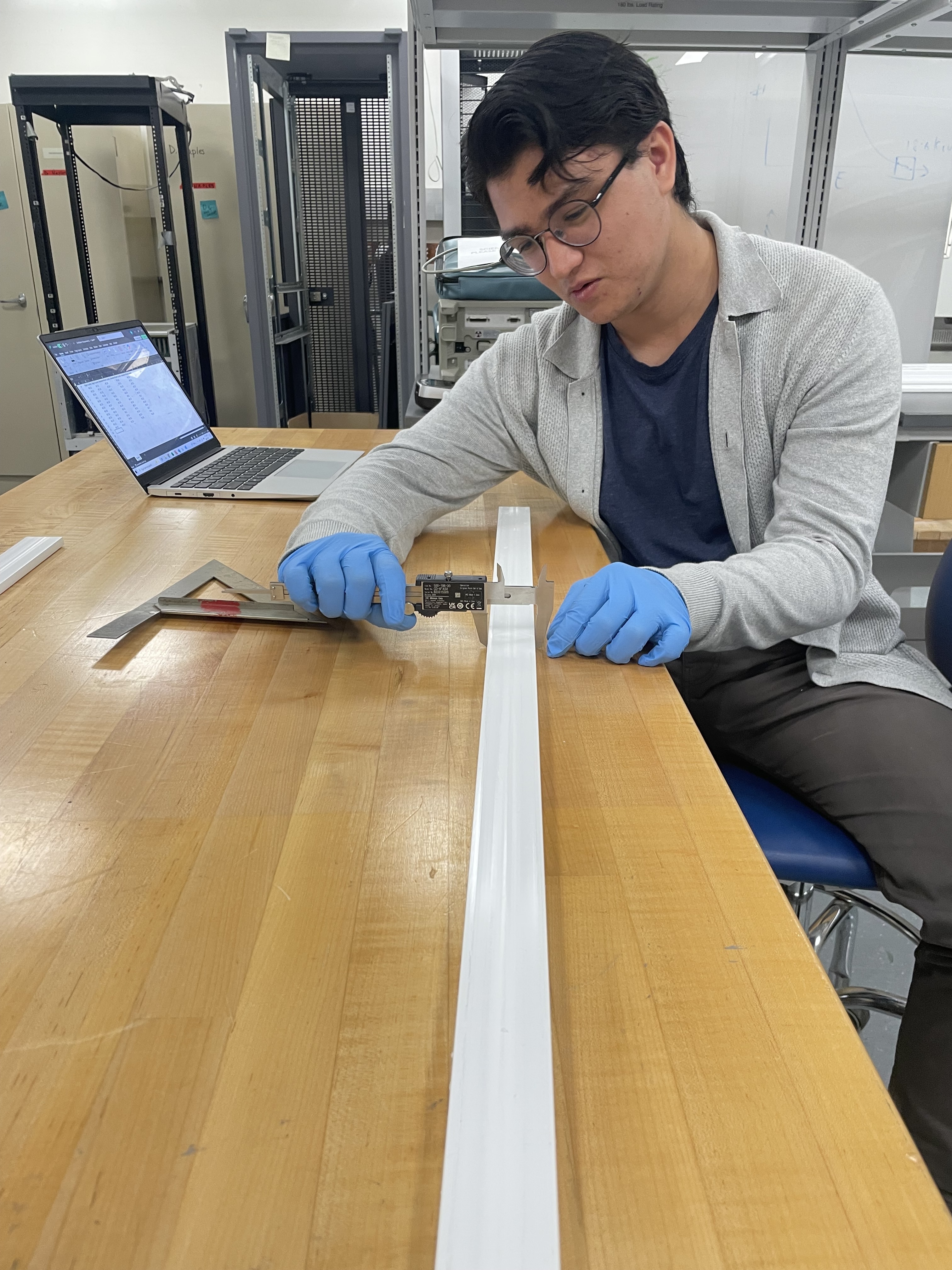
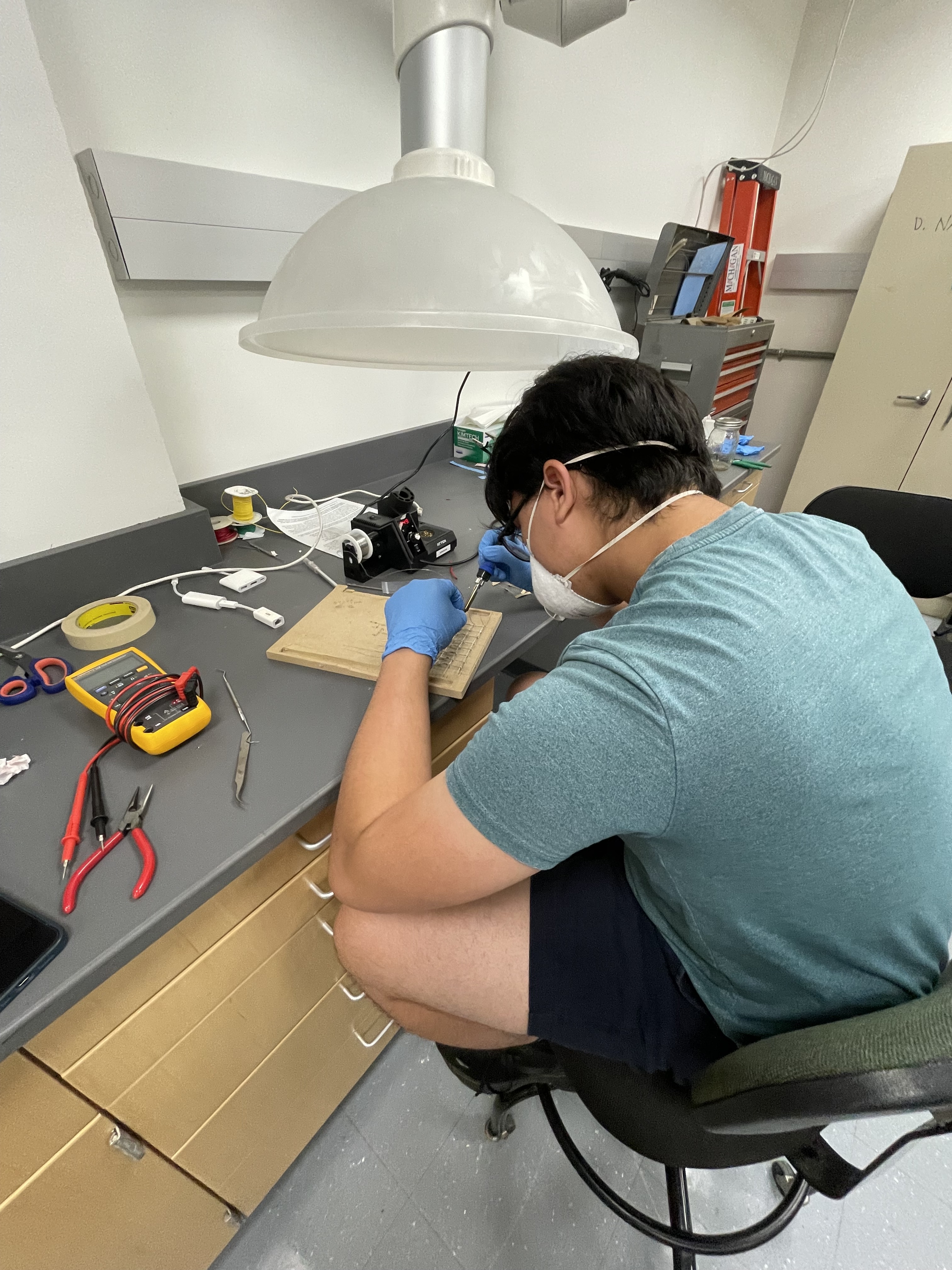
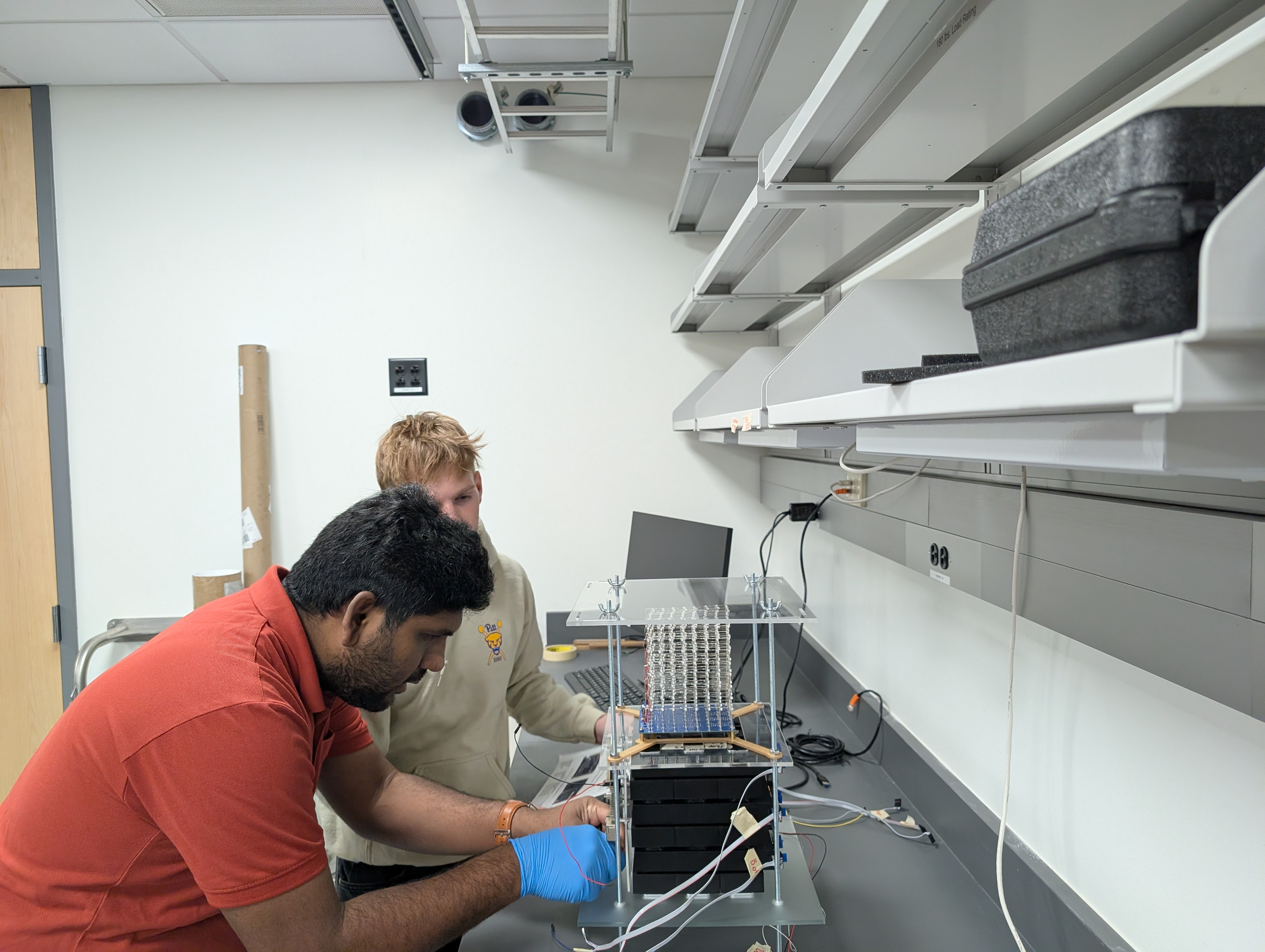
Student involvement is central to mini-CoRTEx, with students contributing to design iteration, assembly, debugging, and early data validation.
This training model gives undergraduates broad exposure to experimental particle physics methods that are usually encountered later in graduate-level research.
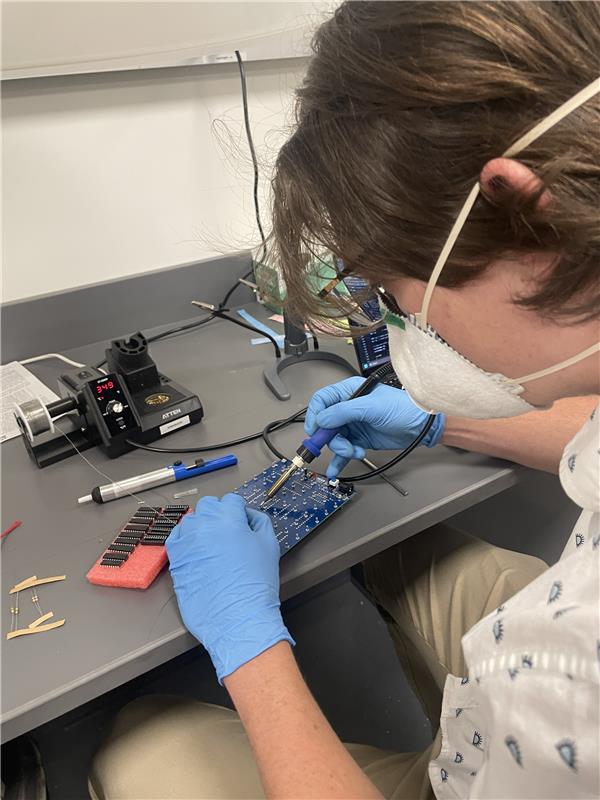
.jpeg)
.jpeg)
.jpeg)
.jpg)
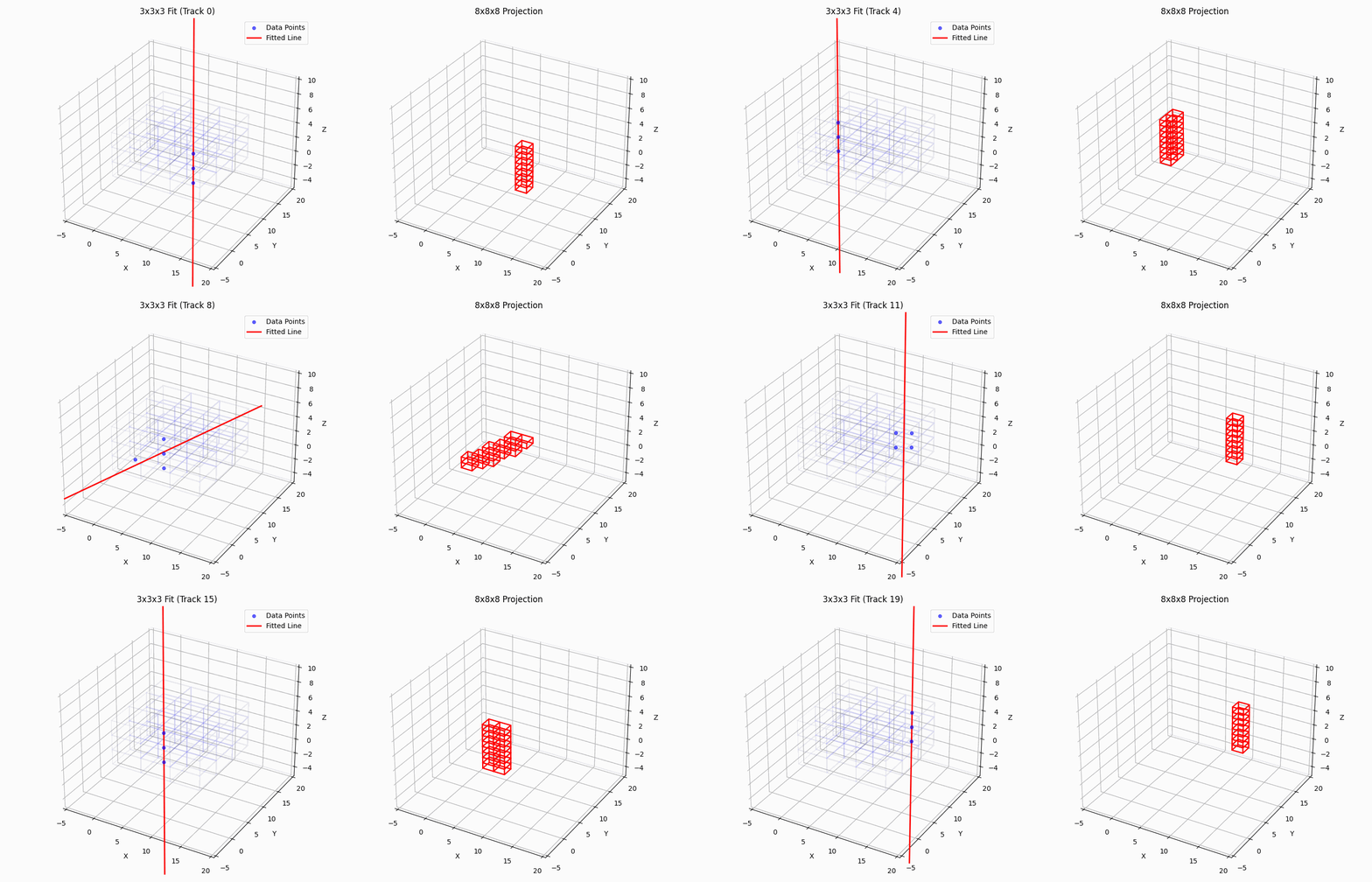
Animated event display showing how detector hits are turned into reconstructed particle tracks.
The Team
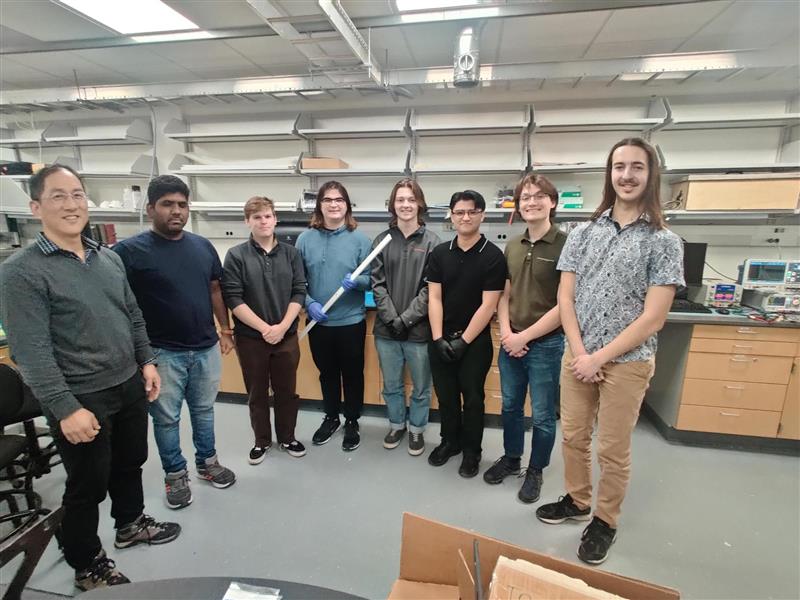
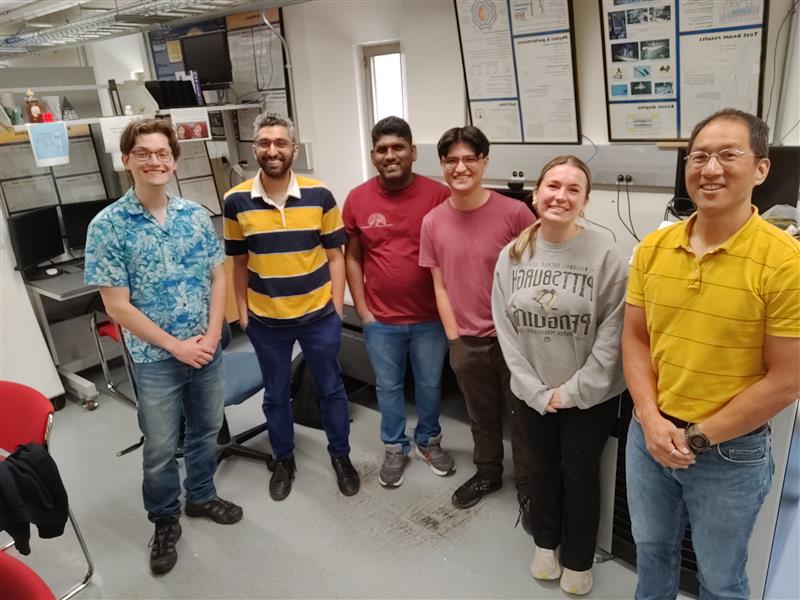
CoRTEx is led by Prof. Pranava Teja Surukuchi and Prof. Tae Min Hong. Technical leadership and hands-on training are provided by Yuvaraj Elangovan. Undergraduate students play a central role in detector development, simulation, and data analysis.
PIs: Prof. Pranava Teja Surukuchi, Prof. Tae Min Hong
Project Lead: Yuvaraj Elangovan
Students: Kyle Mo, Sean Maloney, Cooper Gray, Viviana Fiverson, Al Riska, and Brent Clelland (now at NIU)